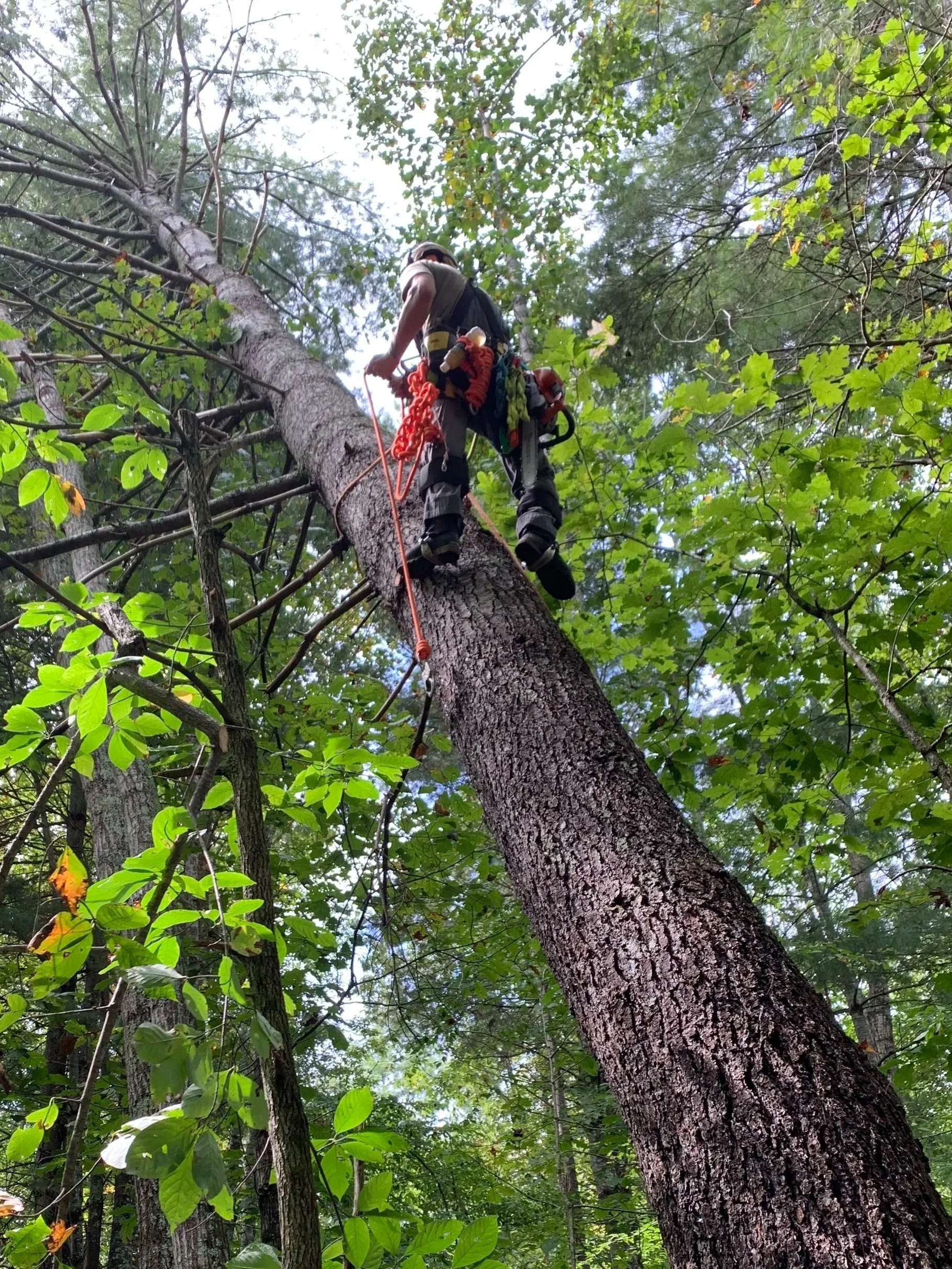
Where crazy meets years of skills !!!
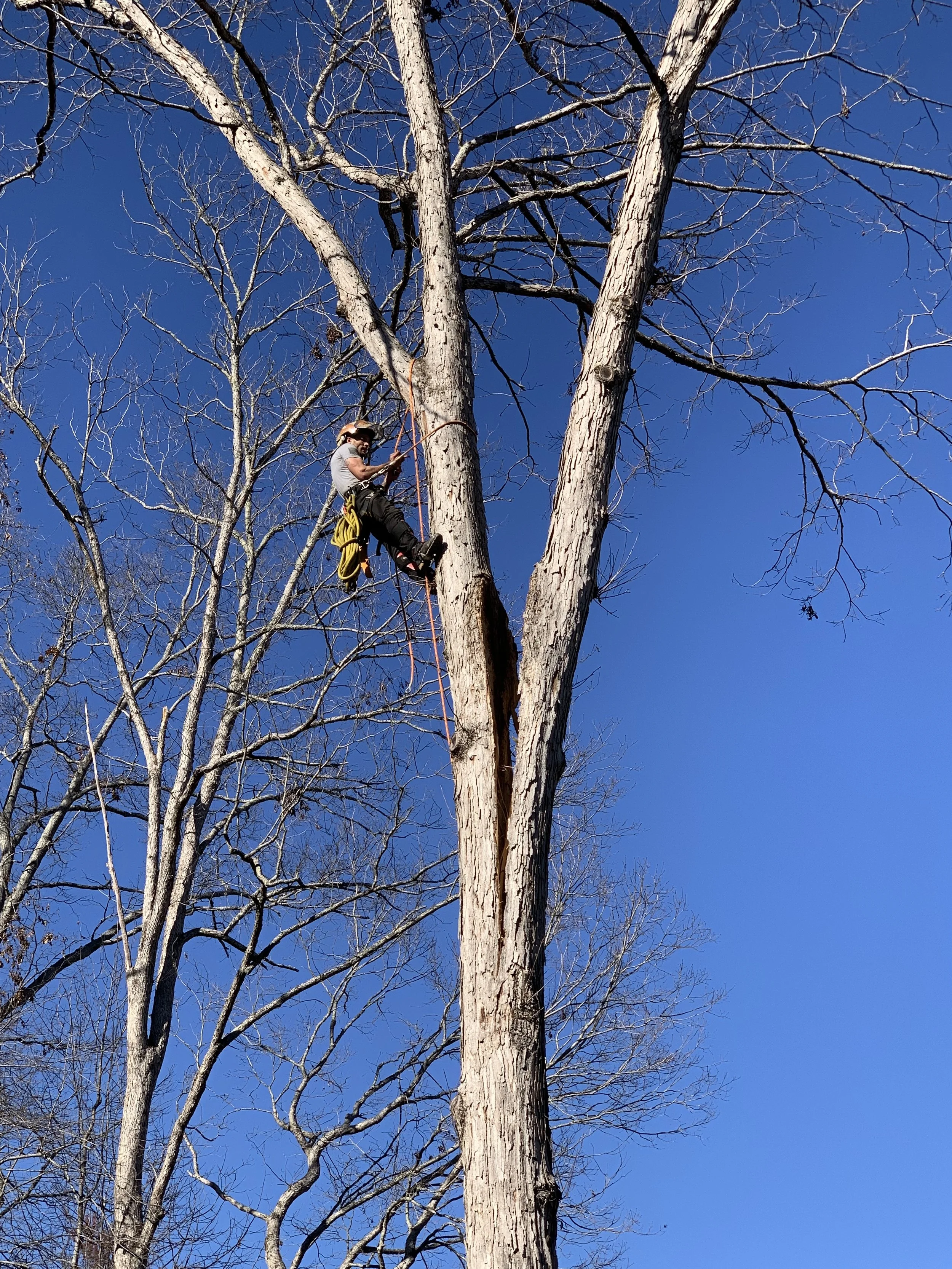
For expert tree service, hiring a climber is entrusting your property to a true professional who masters a high-skill, high-risk profession. Professional tree climbing is inherently dangerous, often ranking among the most perilous occupations due to working at extreme heights, handling powerful chainsaws, and navigating the unpredictable nature of living trees. This demanding work requires far more than just a head for heights; our certified arborists possess elite skills in rope and knot expertise, advanced climbing techniques like SRT, and comprehensive tree biology knowledge to assess structural integrity. When you need precise pruning or safe tree removal, choose our highly trained tree climbing specialists who prioritize rigorous safety protocols and gear inspection to ensure every job is completed without incident.
Our Approach
1. Define the Scope of Work: This is the crucial first step, usually involving a site visit and assessment. The goal is to accurately determine exactly what the client wants done, including specific tasks like pruning, removal, stump grinding, and debris cleanup. It's vital to outline every task, even seemingly minor ones, to avoid "that'll be extra" conversations later.
2. Measure and Assess Variables: Measure the trees and determine all applicable variable factors. These factors significantly influence the final price and often include:
• Size of the Tree: Larger trees require more labor and specialized equipment.
• Location and Access: Trees near buildings, power lines, or on steep slopes increase difficulty and risk, thus increasing cost.
• Tree Condition: Diseased, damaged, or complex structures may require more time and specialized techniques.
3. Calculate Total Costs: The quote is built upon calculated costs, which typically include:
• Labor Costs: Estimated by determining the man-hours required for each task and multiplying by the crew's hourly labor rate. This cost often makes up 30-50% of total operational costs.
• Material Costs: Costs for any materials used.
• Equipment Expenses: Costs related to specialized tools, chippers, or heavy machinery like bucket trucks.
• Overhead Expenses: Indirect costs like administrative staff, general operational expenses, and the wear/tear/replacement of safety gear and tools.
• Travel Costs: Fuel and time spent traveling to and from the site.